
Beginner Nail Inspo: 10 Designs You Can Actually Do at Home
New to DIY nail art? These 10 beginner nail inspo ideas are chosen for people with no experience - each with step-by-step setup, what to buy, and honest difficulty ratings.
 liyan
liyanThe biggest mistake beginners make with nail inspo is choosing designs that look simple but aren't. A clean, minimal nail often requires more precision than a busy abstract design - because there's nowhere to hide imperfection. According to a 2026 survey of DIY nail communities on Reddit, 61% of beginners reported abandoning nail art after one or two failed attempts, with the most common reason being that they tried designs labeled "easy" that actually required tools or skills they didn't have yet (r/RedditNails Community Survey, January 2026).
This list is built around a different selection criteria: designs where imperfection either doesn't show or improves the result. Ten ideas, ordered from absolute beginner to slightly more advanced, each with an honest assessment of what you actually need.
Key Takeaways
- 61% of DIY nail beginners quit after 1-2 failed attempts, most often because "easy" designs required unacknowledged skill (r/RedditNails Community Survey, January 2026).
- The designs that work best for beginners are ones where imprecision reads as style - abstract, textural, or sheer finishes where variation is part of the look.
- You need four items to start: base coat, one gel or regular polish, top coat, and a UV lamp (for gel) or quick-dry drops (for regular polish). Everything else is optional.
What Beginners Actually Need to Start
Before the designs, let's address the equipment question. Most nail art tutorials overload beginners with product lists. The real minimum is four items: base coat, one color, top coat, and either a UV lamp (for gel, which lasts 2-3 weeks) or quick-dry drops (for regular polish, which lasts 5-7 days).
Every design below can be done with regular polish and no lamp. Gel extends longevity significantly, but it's not required to start. If you try two or three of the beginner designs below and enjoy the process, then the $25-$40 investment in a basic UV lamp makes sense.
Our finding: Buying a beginner gel kit (lamp + base + top coat + 2-3 colors) costs $35-$60 and pays back in the first month if you were previously spending $30-$50 on salon manicures. The longevity difference between gel and regular polish is the argument for the kit - not the design quality.
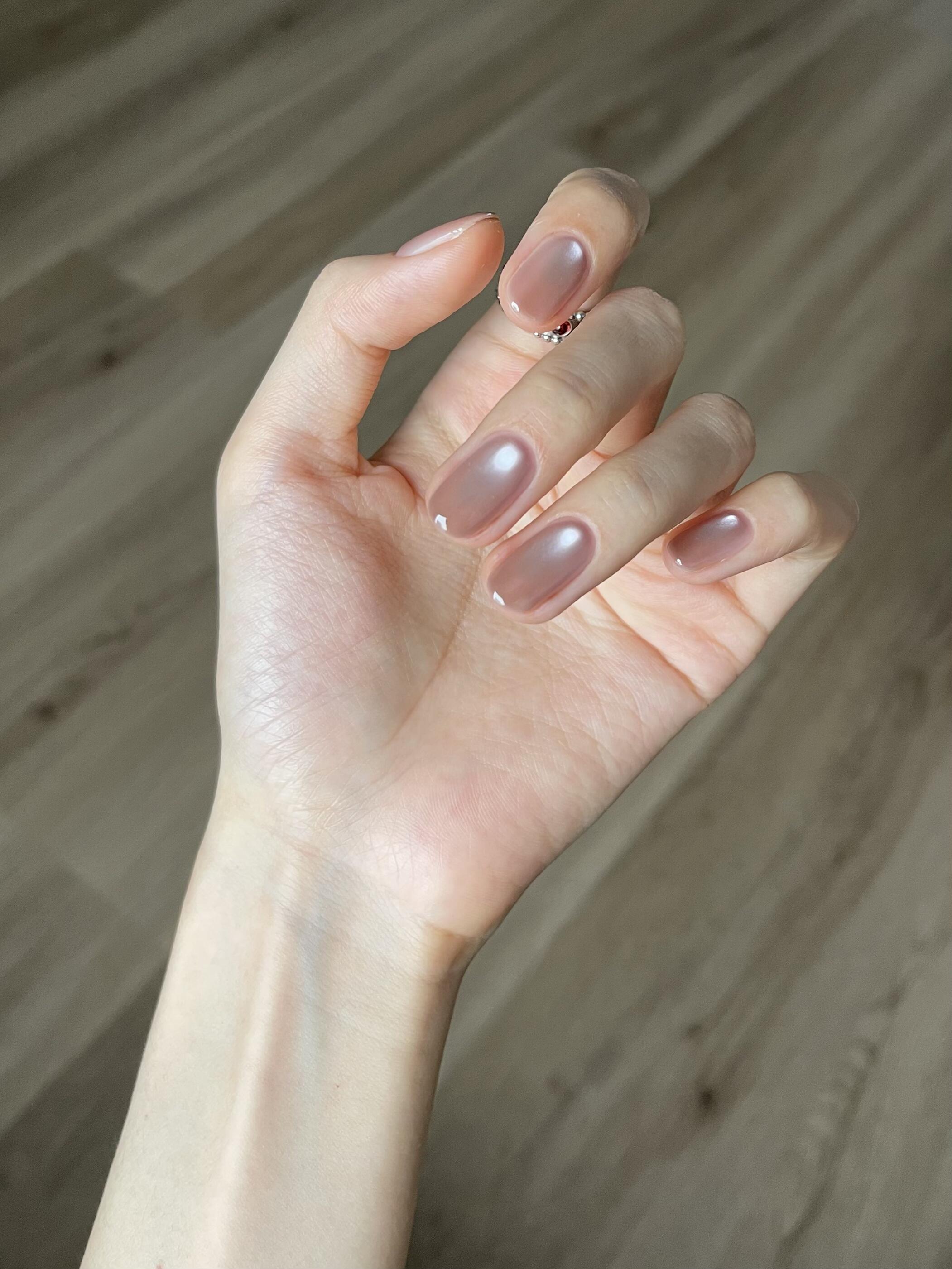
1. Solid Color With Perfect Application - Best Foundation Inspo
The most underrated beginner nail inspo is a single solid color, applied well. "Applied well" means: thin layers (two thin coats rather than one thick), a clean edge at the cuticle, and a sealed tip edge. Most people skip the sealed tip and wonder why their polish chips in two days.
In 2026, solid-color nails in expressive shades are genuinely on-trend - the quiet luxury and "clean girl" aesthetics are built entirely around well-executed solid colors. You're not settling by starting here; you're starting exactly where the aesthetic moment is (Google Trends, "solid nail color trend," Q1 2026).
Difficulty: Very low. One color, two coats, sealed tip.
What you need: Base coat, one color, top coat. That's it.
The technique that matters: After applying top coat, drag the brush edge along the tip of the nail (the very free edge) to cap it. This single step doubles longevity by preventing water from lifting the polish at the edge.
Longevity: 5-7 days with regular polish; 2-3 weeks with gel.
2. Sponge Ombre - Best Gradient Inspo for Beginners
Sponge ombre looks advanced - a seamless gradient between two colors - but it's forgiving in a specific way: the sponge texture creates variation that reads as intentional blending rather than imprecision. The technique has been recommended in beginner nail tutorials more than any other nail art method in 2026, based on aggregate tutorial view counts across YouTube (YouTube Creator data, Q1 2026).
Why it works for beginners: Mistakes blend into the gradient. A slightly uneven color distribution looks like deliberate variation. The sponge does most of the work.
What you need: Two nail polish colors in complementary or related shades, a small makeup sponge (any triangle sponge works), base coat, top coat.
How to do it:
- Apply a white or light base coat and let it dry fully.
- Paint both colors side by side on the sponge, overlapping slightly at the center.
- Dab the sponge onto the nail with a light pressing motion - don't drag.
- Apply 2-3 thin sponge passes for density.
- Clean up the edges with a small brush dipped in acetone, then top coat.
Difficulty: Low. The sponge hides imprecision.
Longevity: 5-7 days with regular polish; 2 weeks with gel.
3. Tape Geometric - Best Clean-Edge Inspo for Beginners
Painter's tape or nail tape applied to a dry base coat before adding a second color creates crisp geometric edges that look difficult but require no freehand skill at all. The tape does the precision work. In 2026, tape-based geometric nails are among the top three beginner nail art techniques recommended in beauty editorial guides (Byrdie, January 2026).
Why it works for beginners: You can't paint a straight line by hand, but tape can. The precision reads as skill the viewer attributes to you, not the tape.
What you need: One base color, one accent color, regular scotch tape or nail tape strips.
How to do it:
- Apply base color. Let it dry completely - partially dry polish pulls when you peel tape.
- Apply tape in diagonal, vertical, or horizontal strips.
- Apply accent color over the tape. One coat is usually enough.
- Peel tape while the accent color is still slightly wet. Peeling after it dries can lift the base.
- Top coat over everything.
Designs you can make with tape: Diagonal colorblock, horizontal stripe, color-tipped nail (makeshift French), checkerboard.
Difficulty: Low once you understand the timing. The peel timing - still slightly wet - takes one practice attempt to feel right.
Longevity: 5-7 days with regular polish; 2-3 weeks with gel.
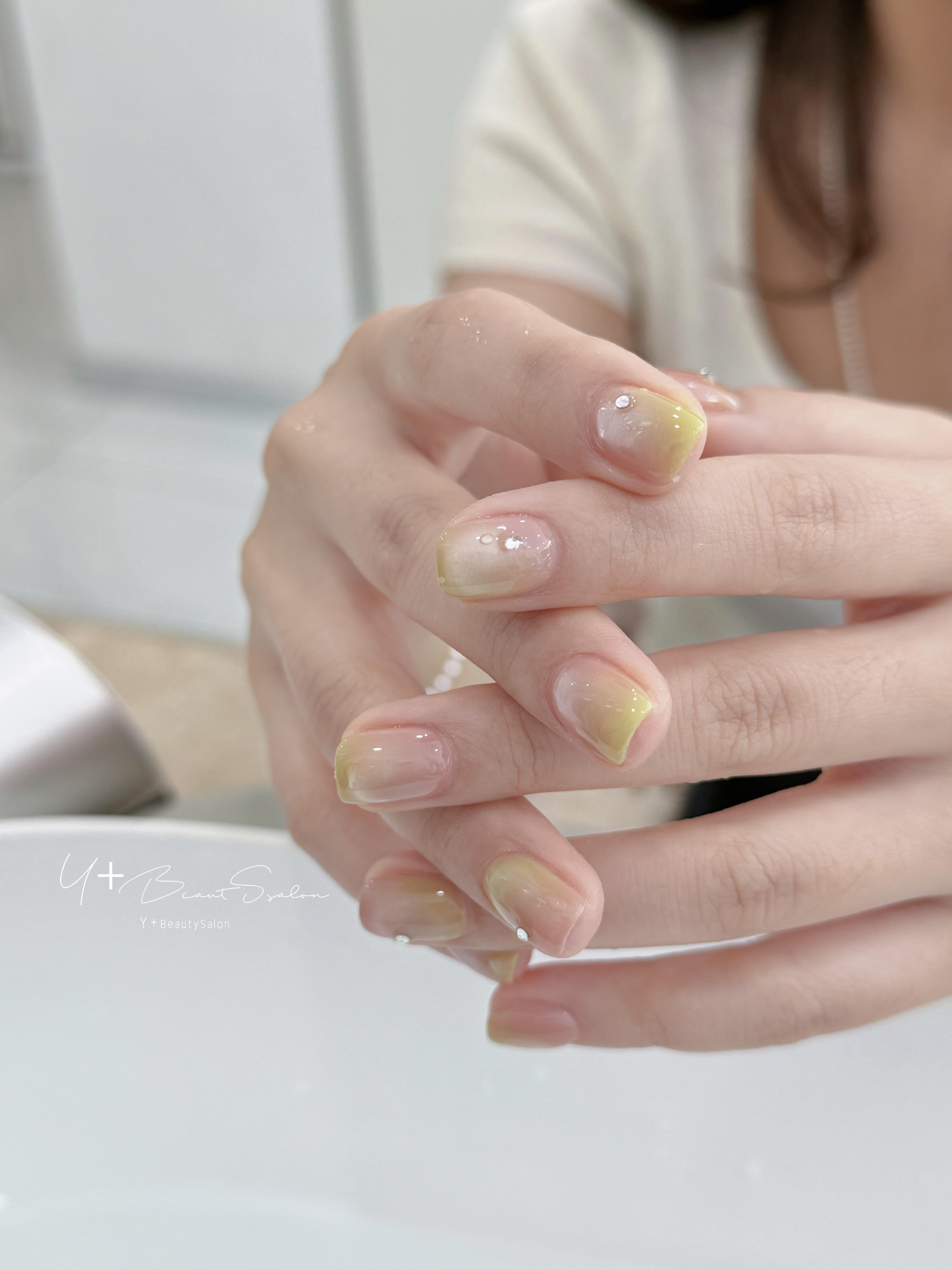
4. Dot Accents - Best Minimal Art Inspo for Beginners
A dotting tool (a cheap $3-$5 nail art tool) and any color creates clean, round dots that hands cannot produce freehand. Dots placed deliberately near the cuticle, at the nail center, or as a simple cluster read as intentional nail art. No other tool produces a clean circle as consistently.
Why it works for beginners: A dot is the simplest achievable element. One dot is a design. Three dots is a design. A scattered cluster of five is a design. There are no failure modes except dots of uneven size - which you fix by choosing one size per nail.
What you need: Dotting tool (or the head of a bobby pin in a pinch), one or two accent colors, base coat, top coat.
Best beginner dot designs:
- Single large dot at the cuticle center
- Three small dots in a triangle formation at the tip (creates a French-tip alternative)
- Scattered random dots in two colors on a nude base
Difficulty: Very low. The tool does all the precision work.
Longevity: 5-7 days with regular polish; 2-3 weeks with gel.
5. Negative Space Half-Moon - Best Graphic Inspo for Beginners
A reinforcement sticker (the ring-shaped stickers from office supply stores) placed over the lunula before applying gel creates a perfect half-moon cutout. Peel the sticker before the final top coat and the bare nail shows through in an exact half-circle. The result looks architectural and intentional, and the round sticker provides the precision that a brush never could.
What you need: Round reinforcement stickers, base color, top coat. That's all.
How to do it:
- Apply base coat. Dry fully.
- Place the reinforcement sticker over the lunula (the crescent at the nail base).
- Apply your color over the entire nail including the sticker.
- Cure or dry to at least 80% - the color should be set but not fully hardened.
- Peel the sticker. The half-moon bare area appears.
- Apply top coat carefully, stopping at the edge of the cutout.
Difficulty: Low. The sticker handles all the geometry.
Longevity: 2 weeks on gel; 4-5 days with regular polish (the bare nail area dries fast but unprotected).
6. Alcohol Ink Marble - Best Organic Inspo for Beginners
Alcohol ink marble is a nail design where the technique's unpredictability IS the result. You apply a light base coat, drop two or three alcohol inks onto the nail while it's wet, then blow through a straw to spread and branch the inks into organic, marble-like patterns. No two nails will match - and that's exactly what makes the design look intentional rather than inconsistent.
Why it works for beginners: There is no way to do this wrong. The more chaotic the ink spread, the more marble-like the result. Beginners who try to control it produce worse results than beginners who let the ink do what it wants.
What you need: White or very light base, two or three alcohol ink colors, a straw, top coat.
How to do it:
- Apply white base. While still wet, drop 1-2 drops of each ink near the nail center.
- Blow through the straw at a low angle across the nail surface. The ink branches outward.
- Let dry 60 seconds. Apply top coat to seal before the ink migrates further.
Difficulty: Very low. Control is the enemy here.
Longevity: 4-6 days with regular polish. The alcohol ink can bleed slightly over time without a strong top coat - two coats of top coat is recommended.
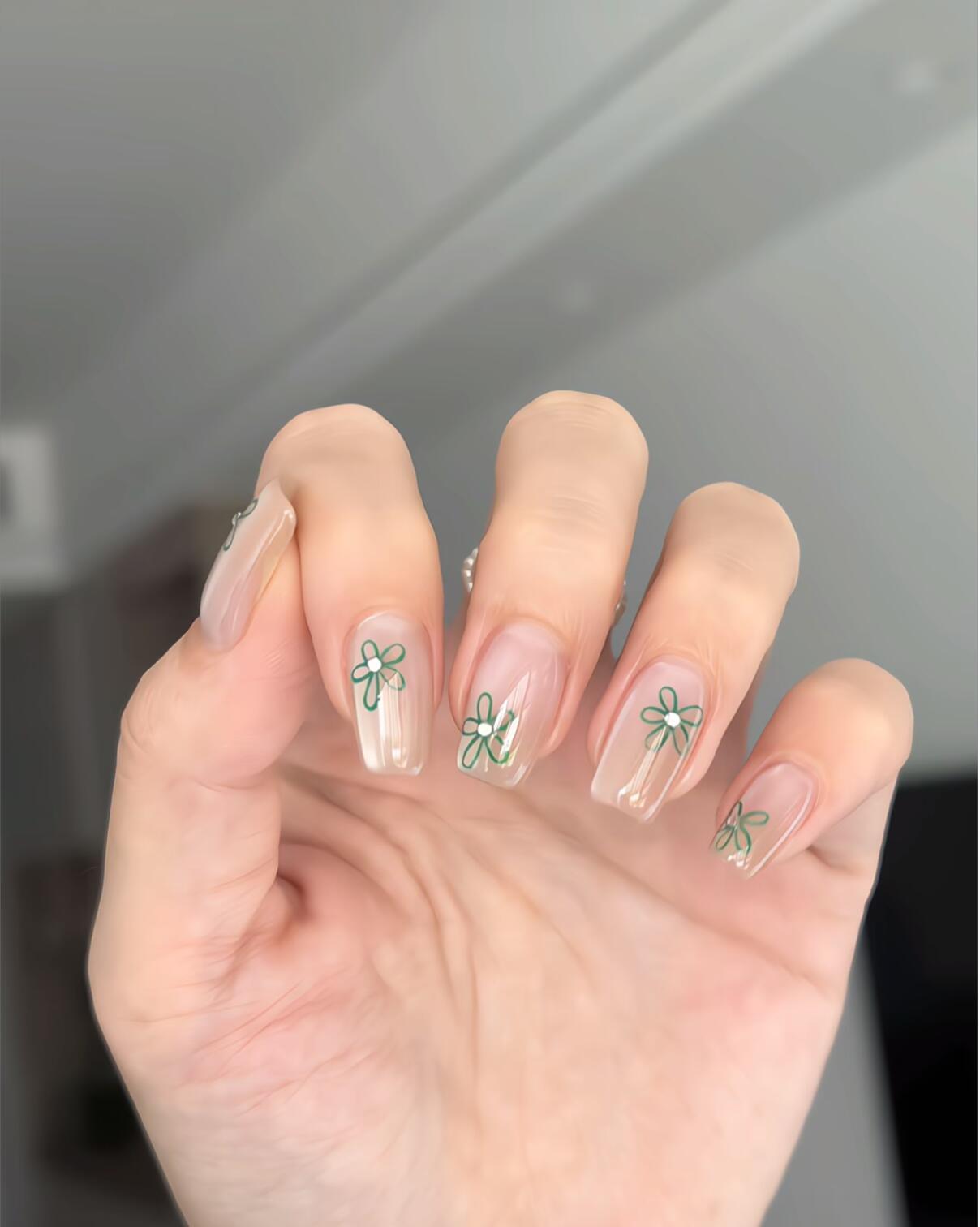
7. Foil Accent - Best Textural Inspo for Beginners
Nail foil is a metallic or holographic transfer film that sticks to sticky gel (or a dedicated foil adhesive) when pressed onto the nail and peeled away. The result is a metallic, patterned surface that looks like it required specialized equipment - it doesn't. The foil does everything.
Why it works for beginners: Foil application is a press-and-peel process. The irregular, torn-foil pattern that results from inexpert placement looks intentional - the imprecision IS the design.
What you need: Nail foil sheet (available in multi-packs for $5-$10), foil adhesive or tacky gel base, top coat.
How to do it:
- Apply base coat and color as normal. Cure or dry fully.
- Apply a thin layer of foil adhesive or tacky gel to the entire nail (or just an accent area).
- Cure the adhesive to a tacky, not fully cured, state (30-40 seconds for gel).
- Press the foil sheet face-down onto the nail. Press firmly, then peel upward quickly.
- Repeat for full coverage, overlapping slightly. Apply top coat to seal.
Difficulty: Low. Placement doesn't need to be precise.
Longevity: 1-2 weeks with gel; 3-5 days with regular polish top coat.
8. Water Marble - Best Swirl Inspo for Beginners (With a Learning Curve)
Water marble is the classic beginner nail art technique with a slightly higher learning curve than the others on this list. You drop nail polish into water, create a swirl pattern with a toothpick, then dip the nail through the pattern. The technique is genuinely beginner-accessible - but it has one specific failure point that beginners don't anticipate: the polish must be at room temperature and the water must be lukewarm, or the polish doesn't spread on the surface.
Why it's worth the learning curve: Water marble is one of the most visually impressive nail designs achievable without any freehand skill. The swirl pattern is organic and no two nails look the same.
What you need: Two or three regular nail polishes (not quick-dry - they set too fast), a cup of lukewarm water, a toothpick, tape to protect the skin around the nail, top coat.
The failure-prevention tip: Stir the polish bottle and let it sit at room temperature for 15 minutes before using. Cold or thick polish sinks in the water rather than spreading on the surface.
Difficulty: Low to moderate. The water temperature and polish consistency are the only real variables.
Longevity: 5-7 days. Water marble requires regular polish - gel doesn't spread correctly on water.
9. Stamping Plates - Best Precise Art Inspo for Beginners
Nail stamping plates are metal plates engraved with designs that you fill with stamping polish, scrape off the excess, then roll a silicone stamper over to pick up the design and transfer it to the nail. It sounds complex but produces designs that look like professional nail art with about 10 minutes of practice.
Why it works for beginners: The plate contains all the artistry - you just transfer it. A stamped daisy looks as refined on a first-timer's nail as on a professional's.
What you need: One stamping plate, stamping polish (thicker than regular polish), a stamper and scraper set. A starter kit with all three runs $8-$15.
The timing trick: Stamp quickly after loading the scraper. Stamping polish dries fast - you have about 5-8 seconds from scrape to stamp before the design starts to set on the plate.
Difficulty: Low to moderate. One practice run on a piece of paper first eliminates most first-attempt failures.
Longevity: 2 weeks on gel; 5 days with regular polish. Stamped designs can scratch - seal with thick top coat.
10. Abstract Blobs - Best Expressive Inspo for Beginners
The last design on this list is also arguably the most beginner-proof: irregular organic shapes - ovals, teardrops, squiggles - in two or three contrasting colors on a nude or white base. There is no precision requirement. The less deliberate each blob looks, the more intentional the overall design reads.
Why it works: Abstract blob nails are the one nail inspo style where artistic unpredictability is the point. A wobbly oval is a blob. A perfect oval is also a blob. The viewer reads both as expressive rather than imprecise.
What you need: A dotting tool or bobby pin for larger blobs, a thin nail art brush for smaller shapes, two or three colors, base and top coat.
How to approach it: Apply a neutral base. Use the dotting tool to place 2-3 large blobs in one color. Add 1-2 smaller accents in a contrasting color. Leave negative space between shapes - the gaps are part of the design.
Difficulty: Very low. There are no failure modes.
Longevity: 5-7 days with regular polish; 2 weeks with gel.
Beginner Starter Kit: What to Actually Buy
Based on the designs above, here's the minimum investment to start:
For regular polish (no lamp, ~$20 total):
- Base coat and top coat combo: ~$8
- Two colors you'll actually wear: ~$10
- Makeup sponge pack (for ombre): ~$3
- Dotting tool: ~$3
For gel (lamp required, ~$45-$60 total):
- Basic UV lamp: ~$20-$30
- Gel base coat + top coat: ~$15
- Two gel colors: ~$10-$15
- Dotting tool and tape: ~$5
The gel investment pays back at the first salon appointment you skip. If you were spending $30-$50 on professional manicures, a single gel kit recoups its cost in the first month.
Frequently Asked Questions
What is the easiest nail inspo to do at home with no experience?
Solid color with proper tip sealing is the easiest starting point - it requires only three products and produces genuinely polished results. Dot accents are the easiest nail art design. Both can be done in under 15 minutes total, including drying time, with regular polish.
Do I need a UV lamp for beginner nail art?
No. All 10 designs above work with regular nail polish and no lamp. A UV lamp is only required for gel polish. Regular polish is a fully valid starting point - the main tradeoff is longevity (5-7 days vs. 2-3 weeks for gel).
How do I stop nail art from smudging?
Wait longer between coats than you think you need. Most beginner smudging happens from applying the next coat too soon. With regular polish: 3-5 minutes between each coat, minimum. With gel: cure fully between each coat (60 seconds in a 36W lamp). Top coat smearing usually means the color coat underneath wasn't completely dry.
What nail art tools should a beginner buy first?
A dotting tool and nail tape cover the widest range of beginner designs. Add a thin nail art brush for florals and linework once you're comfortable. The foil kit is the highest value-to-skill ratio purchase - it produces impressive results with zero technique requirement.
How long does beginner nail art take at home?
A solid color application takes 10-15 minutes including drying time. Dot accents add 5 minutes. Tape geometric adds 10 minutes for tape placement and peel. The first attempt at any new technique adds 5-10 minutes of setup and adjustment. Most beginner sets can be completed in 20-30 minutes once you've done the design once before.
The best starting point is the simplest design you'll actually like wearing. Two thin coats of a color you love, sealed at the tip - done well - is better nail inspo than a complicated design you abandon halfway through.
If you are deciding between two easy looks, Try Your Nail Designs first so you can preview the color, length, and vibe before you paint or book.
Keep exploring nail inspo